
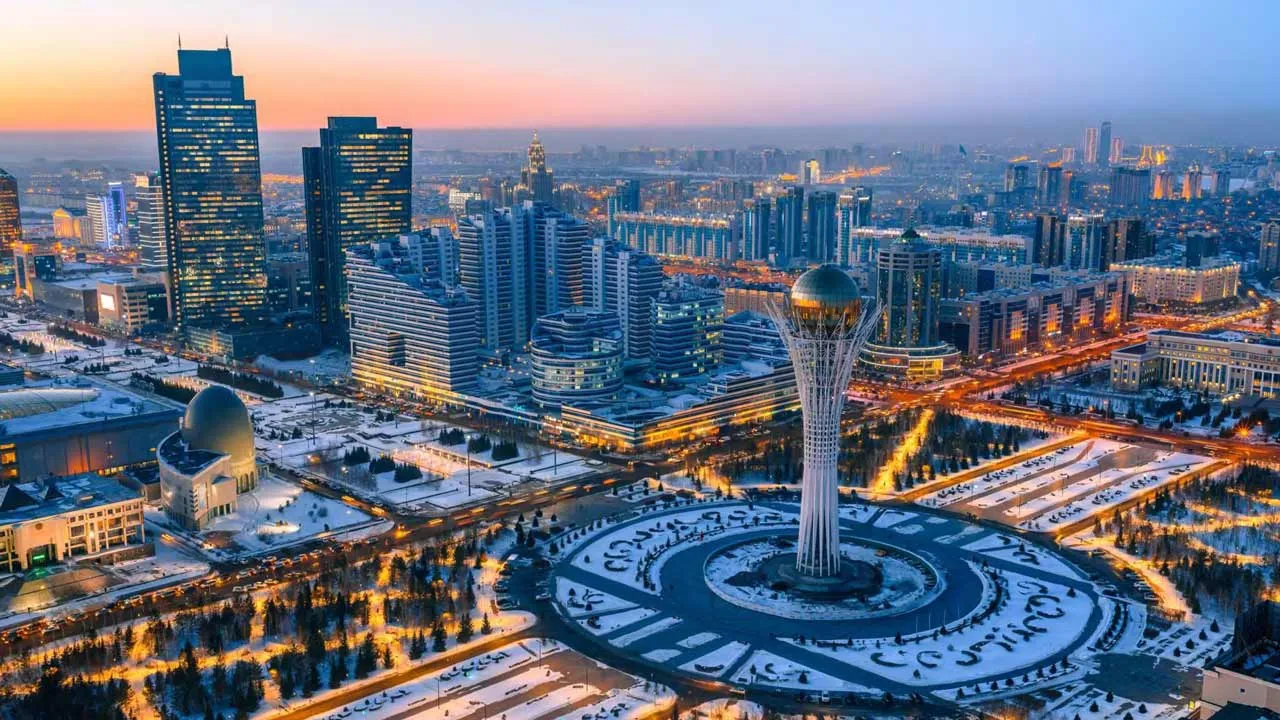
Travel Guide to Kazakhstan
Everyone lands in Almaty. Everyone stays in Almaty. Fair enough; the mountains sit right at the city’s edge, the food is quietly excellent, and the whole place has an unhurried energy that makes you want to extend your stay without any particular reason.
But here’s what nobody tells you before you go.
Kazakhstan is the 9th largest country on earth, covering an area of land that has hundreds of different geographical features such as red rock canyons, ghost woods, singing sand dunes, two kinds of water lakes, and wild flamingos that have yet to be discovered by the general traveling public. Most people will return from Kazakhstan without ever having seen these beautiful places.
Charyn Canyon: Central Asia’s Grand Canyon
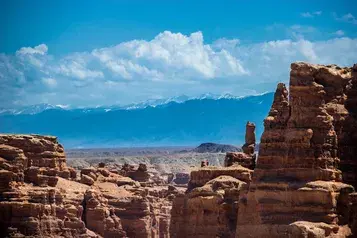
Your brain will file this under Arizona or Patagonia. You would be hard pressed to believe you were in Central Asia if you were to visit the Valley of Castles, which is about two hundred kilometers east of Almaty. Wind and water have eroded red sandstone over millions of years into what the locals refer to as the Valley of Castles. From the valley floor, it is a flat, two-kilometer walk to the Charyn River. Families do it easily. So do grandparents.
What nobody mentions is how the canyon changes through the day. Morning turns the rock pale orange. Afternoon pushes it deep red. Watching the sunset light up the canyon walls creates a mystical view that appears to have some form of internal light, which is completely incorrect. Time your arrival for late afternoon. The difference between noon and five o’clock here is not a small thing.
Lake Kaindy: The Earthquake Lake
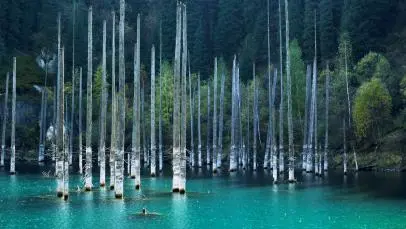
In 1911, there was a massive earthquake in the area that caused a previously standing mountain gorge to collapse and block the flow of water. The forest below was drowned when the water rose above its banks. What’s left is a bright turquoise lake with bleached white tree trunks standing straight out of the surface in complete silence.
Nobody designed this. An earthquake did it in an afternoon.
Because the water stays extremely cold year round, the branches and pine needles submerged over a century ago never decomposed. Divers have gone down and found them perfectly preserved. Above water, the trunks are white and bare. Below, the forest is still intact.
The road in is rough. Hire a local 4×4. They know which stretches flood after rain and which routes actually save time.
Kolsai Lakes: Where Locals Go to Disappear
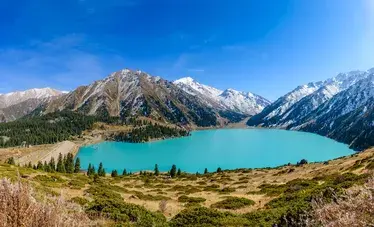
Ask someone from Almaty where they go to genuinely switch off and Kolsai comes up every time.
Three alpine lakes stacked up the mountain inside dense pine forest. Wooden rowboats. Walking paths along the water. Light breaking through trees in scattered pieces. The nearby village of Saty has local guesthouses where families cook slow lamb, fresh bread, and keep refilling your tea before you think to ask.
Kolsai is a closest thing you will be able to find to being a guest in someone’s home, not a guest at a hotel or tourism facility. Do not plan on keeping to a rigid schedule for your visit because the intention of Kolsai is for you to have a leisurely time.
The Singing Dune: A Sand Dune That Actually Makes Sound
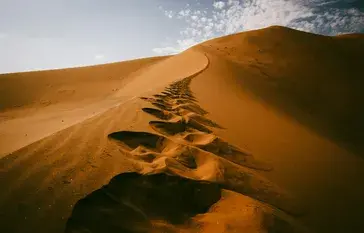
Most People Are Probably Not Gunna, Chuckle Or Laugh Till They Hear This One!
Located Near Almaty In Kazakhstan, Altyn-Emel National Park, A Three-kilometer-long Sand Dune Creates A Low-toned Sound (Like A Low Key Vibration) When Dry Wind Passes Over The Surface. Scientists Have Studied This Sound For Years.
The Local People Have Known About It For Years. The Sound Is Real And Very Loud. Standing Next To The Dune When The Wind Blows Creates An Experiential Moment Difficult To Imagine Or Reinvent Into Words.
The National Park Is Home To Wild Horses, Gazelles And Przwalski’s Horse, An Endangered Species Of Horse Found In Very Few Countries Around The World. While The Climb Up The Dune Was Tough Going Up The Dune, The View Of The Steppe All About Us Was Priceless.
Lake Balkhash: Half Freshwater, Half Saltwater
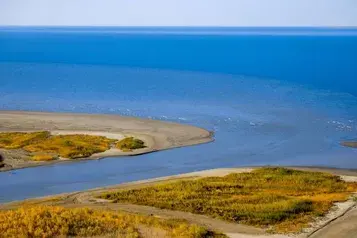
One lake. Two completely different types of water. No mixing.
A natural geographic narrowing divides Lake Balkhash into two sections. The western half is freshwater, fed by rivers. The eastern half is saltwater, losing water to evaporation with no major river input to replace it. Both halves exist within the same continuous lake.
This is extraordinarily rare globally. Getting there requires real effort. For People Who Like To See Places Not Found Anywhere Else, Balkhash Is Worth Travelling Here For.
For people who like to see places not found anywhere else, Balkhash is worth traveling here for.
Turkestan: The Silk Road City Most Travelers Skip
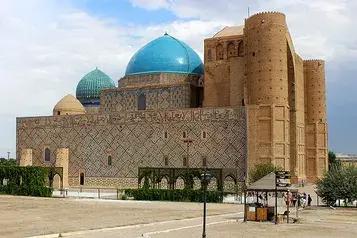
Turkistan holds far more history than both Almaty and Astana, yet many people don’t realize this.
A Part Of The Old Silkroad And A Town Of Many Old Traditions;
The Center Of The Town Has The Mausoleum Of Khoja Ahmed Yasawi Built By Tamerlane (Timur) In The 14th Century And Is Regarded As Some Of The Greatest Examples Of Timurid Architecture Worldwide! It was built to be the largest structure in the Islamic world at the time. It was never fully completed. Somehow that makes it more impressive rather than less.
Most international travelers skip Turkestan because it requires a separate trip south. That’s exactly why it still feels like a genuine discovery when you arrive.
Baikonur Cosmodrome: Where the Space Age Started
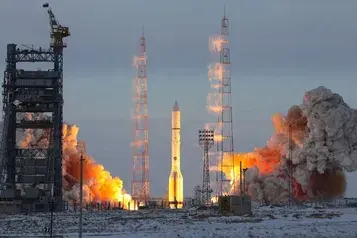
Sputnik launched from here in 1957. Yuri Gagarin became the first human in space from this exact location in 1961. The facility is still operational today.
Organized tours require advance permits through specialist agencies, but on launch days visitors can watch rockets lift off from the same pads that sent the first humans beyond the atmosphere. The museum contains original hardware from actual missions — not replicas.
For anyone with even passing interest in what humans decided to attempt sixty years ago, Baikonur isn’t a detour. It’s the whole point of the trip south.
Korgalzhyn: Flamingos in the Middle of the Steppe
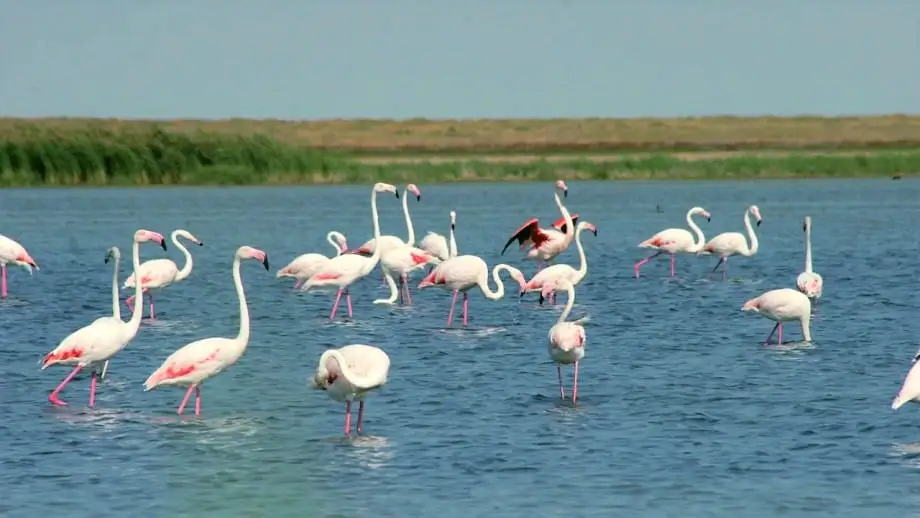
Located about 130 kilometers from Astana in Kurgalzhyn, there are tens of thousands of flamingos that gather each year at the numerous shallow steppe lakes that can be found throughout the nature reserve. The UNESCO World Heritage Site of Kurgalzhyn is also one of the most northern locations on the planet where flamingos, given the appropriate conditions, Continue to flourish during peak migration time. Approximately 300 other species of birds pass through Kurgalzhyn annually during migration, traveling between their breeding grounds in Siberia and their winter locations in South Asia.
The contrast between the flat, dry, windswept steppe and what you actually find there makes this one of the more surreal wildlife experiences in all of Central Asia.
Astana: The City That Shouldn’t Exist Where It Does
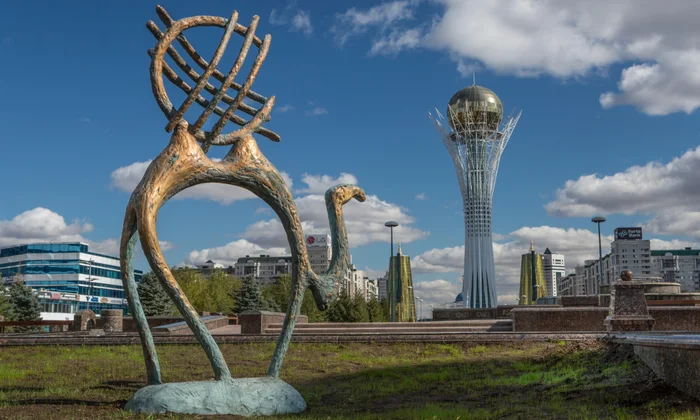
Flat steppe in every direction. Then suddenly — a city that looks like every ambitious architectural concept from the last fifty years decided to exist in the same place.
Astana is the first city in the world to be constructed from scratch (in 1997) on an empty plain, with the buildings giving tribute to Kazakh legend (the “golden tower”) and providing indoor beaches ish. With the capacity to provide seating for approx. 10,000 people, the new mosque is one of the largest mosques anywhere on the planet. The ambience created by Astana makes it seem as if it is not located anywhere else on the planet, but is instead something totally unique.
After mountains and forests and ancient cities, Astana lands like a complete gear change. Which is exactly why it belongs on the itinerary.
The Honest Case for Going Further
Kazakhstan doesn’t sell itself loudly. No aggressive tourism campaign. No carefully packaged identity designed to trend online. The country is genuinely unbothered by whether the international travel world has discovered it yet.
What that means practically is that almost everything in this guide is still quiet. The canyons don’t have souvenir stalls. The singing dune doesn’t have a ticketing queue. The flamingo reserve hasn’t been converted into an eco-resort cluster.
That window doesn’t stay open forever.
Kazakhstan is still a true travel destination where the natural beauty of its mountains, forested ghosts from a long range of traditions, deserted silk road cities, space ships/piers, and unexplainable lakes can be visited and explored without the typical influence of modern travel-related consumables.
Go beyond Almaty. The country is only just getting started.
Book your trip today with Aurora Tours!