
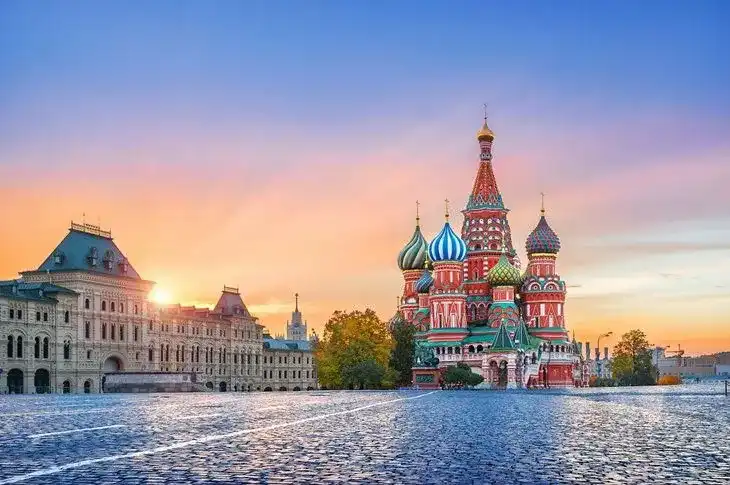
Discover Real Russia Iconic Landmarks and Deep Culture
Eleven time zones. Think about that for a second — by the time people in Kaliningrad are eating breakfast, folks out in Kamchatka are already asleep. That kind of scale bleeds into everything here, the buildings, the landscapes, even how people mark a holiday. Below are the wonders and traditions that actually define Russia, not the watered-down postcard version.
Traveling across it doesn’t feel like moving through a single country. You can leave the massive stone avenues of the western cities and find yourself in endless stretches of quiet birch forests where you won’t see another soul for hours. People here have spent centuries adapting to that sheer size and cold isolation, which is probably why the hospitality inside a Russian home feels so surprisingly warm. It’s a land shaped by quiet patience, deep roots, and landscapes that never seem to end.
Red Square and the Kremlin
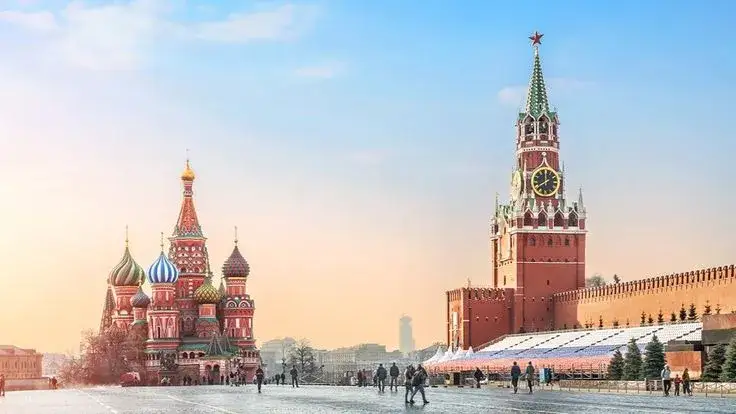
Hard to talk about this country without starting here. Red Square sits at the center of Moscow, and the Kremlin looms on one side of it — still the actual seat of government after tsars, revolutions, and roughly a century of upheaval. Walk through the gates and you’re inside a walled complex packed with cathedrals, palaces, and government buildings that somehow don’t clash with each other despite spanning centuries of architecture.
Everyone knows St. Basil’s Cathedral on sight. Those swirling, candy-colored onion domes look almost fake until you’re standing right underneath them. There’s a story that Ivan the Terrible had the architect blinded afterward so nothing could ever rival it. Historians mostly think that’s a myth, but it’s stuck around anyway because it fits the mood of the place a little too well.
A few steps over, Lenin’s Mausoleum still has his embalmed body on display, a practice running continuously since 1924. Odd experience either way you look at it, and it’s not closing up anytime soon.
The Trans-Siberian Railway
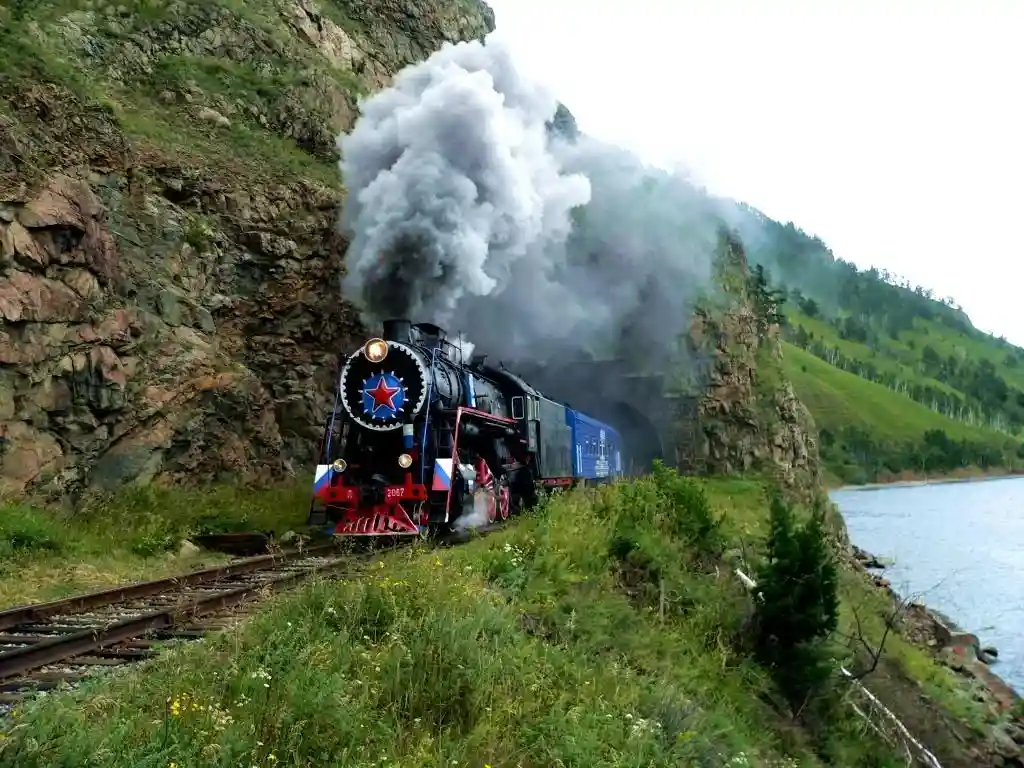
This one’s less a single stop and more a way of moving through the whole country at once. Moscow to Vladivostok, over 9,000 kilometers, seven time zones, roughly a week straight through if you don’t get off anywhere.
Most people break it up — a few nights here, a stop at Baikal, maybe a detour up into Mongolia on one of the branch lines. What actually sells the trip isn’t any particular stop. It’s watching the scenery slide from European Russia into the Urals, then endless taiga, then open steppe, then finally the Pacific. Not many train rides anywhere pull off that kind of shift.
Lake Baikal
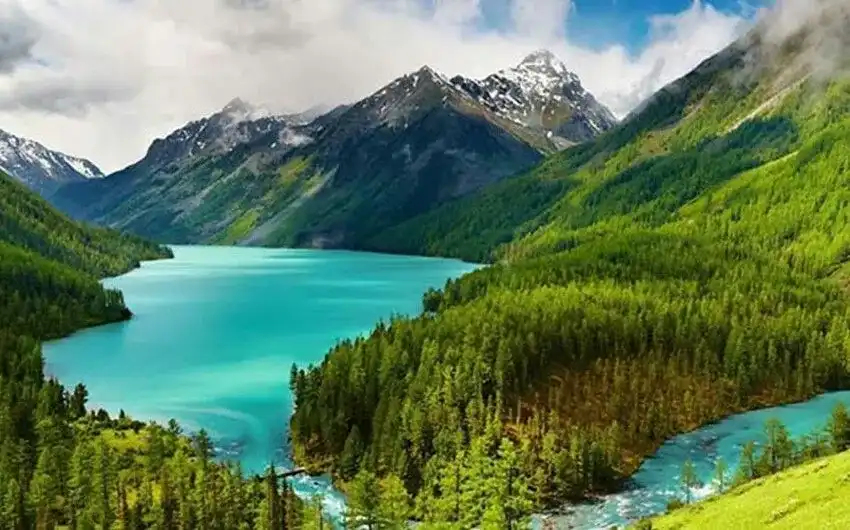
Baikal holds close to 20% of the planet’s unfrozen fresh water. That number doesn’t really land until you’re standing on the shore trying to process it. It’s also the oldest lake on earth and the deepest, formed something like 25 million years ago, with water clear enough in spots to see well past thirty meters down.
Winter turns the whole surface into thick, glassy ice that cracks into strange blue shapes near shore. Locals drive cars straight across it once it’s thick enough — sounds reckless until you realize they’ve been doing it for generations without much drama. Olkhon Island, out in the middle, is one of the spiritual centers of Buryat shamanism, and there’s a weight to the place that’s hard to put into words secondhand.
The Hermitage Museum
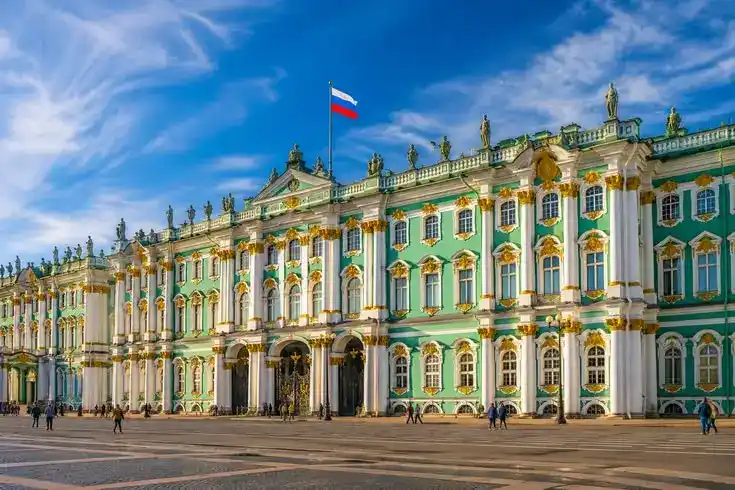
Tucked inside the old Winter Palace in St. Petersburg, the Hermitage holds something like three million objects, and nobody’s actually seen the full collection — most of it sits in storage because there’s simply nowhere to put it all on display. What is out includes Rembrandt, da Vinci, Matisse, plus enough Fabergé pieces to make your head spin.
The building might honestly be the bigger draw. Gilded ceilings, endless marble staircases, room after room that real Romanov emperors once lived in. Give it a full day minimum. Rushing the Hermitage in an hour basically defeats the point of going.
Banya Culture
Calling the banya just a “steam bath” undersells it badly. People beat themselves, or each other, with bundles of birch or oak branches called veniki — sounds rough, but it’s meant to improve circulation and it actually does the job. Between rounds in the steam, it’s completely normal to sprint outside and jump straight into a cold lake, roll in snow, or just dump a bucket of ice water over your own head.
It’s also a deeply social thing. Business gets discussed in the banya. Old friends catch up there. Families go together most weekends. If someone invites you, go. It’s one of the more honest windows into how Russians actually unwind, closer to reality than any of the usual stereotypes.
Maslenitsa
A week-long festival marking the end of winter, rooted way back in pre-Christian Slavic tradition, usually falling in late February or early March depending on the year. Blini sit at the center of it — thin pancakes standing in for the sun, eaten with caviar, honey, sour cream, sometimes all three piled together.
It wraps up with a straw effigy of winter getting burned, clearing the way for spring. Towns run their own versions across the country, with sledding, snowball fights, and tug-of-war thrown into the mix. Less solemn than it sounds on paper — really it’s closer to a big, chaotic street party.
Tea Culture and the Samovar
Tea here isn’t just something you drink, it’s a small ritual built around the samovar — a metal urn traditionally heated with charcoal, though most households run electric ones now. It brews a strong tea concentrate that gets diluted with hot water depending on taste, and the whole setup usually ends up as the centerpiece of a gathering rather than something shoved in a kitchen corner.
Whether it’s something built centuries ago or a habit that just never went away, these are the things that actually shape everyday Russia — far more than any of the usual stereotypes suggest. Seeing even a handful of them in person tells you more about the country than a stack of guidebooks ever could.
Of course, sorting out the logistics across a country this huge — from arranging train tickets to figuring out local guides and visas — can quickly get overwhelming. If you would rather skip the hassle and focus on enjoying the journey, reaching out to the team at Aurora Tours is a smart move. They specialize in putting together smooth, authentic trips to Russia and can handle all the planning for you without any stress.