
There are destinations you visit, and then there are destinations that stay with you — the kind that quietly rearrange something inside you. The second type of country is Uzbekistan. Located in the central region of Asia, this historical region has been a hub for numerous civilizations to trade goods such as spices, silk, and stories for over several millennia. Despite this, many luxury travellers have not visited this country yet; therefore, now is an ideal time to discover it for yourself!
Why Uzbekistan Should Be Your Next Luxury Destination
Many tourist destinations around the globe are frequently visited; people spend several hours in long lines waiting to see things through the lens of someone else’s camera. If you visit Uzbekistan, you can find solitude inside the 14th Century Azure Domed Mausoleum while enjoying the natural light seeping in through the geometric tile work and enjoying the peaceful company of a caretaker who happens to be cleaning the courtyard.
Here’s what sets it apart from other luxury destinations:
- No crowds, no ropes — just you and thousand-year-old architecture in real silence
- Restored merchant houses and historic mansions converted into boutique hotels with genuine character
- Historians and cultural experts available for private, scholar-led tours — not a rehearsed group script
- A food tradition shaped by Persian, Mongol, and Chinese influences, best experienced where it was actually born
- Comparable luxury experiences at a fraction of what they cost in Europe or Southeast Asia
The crowds haven’t arrived yet. That window won’t stay open forever.
Tracing the Historic Silk Road: A Journey Through Time
Although the Silk Route developed into a single road, it actually consisted of a living system of trade routes, relationships and exchanges that linked China with the Mediterranean for many centuries (over 1000 years). It was Uzbekistan most essential to the Silk Route; it was home to Samarkand, Bukhara, and Khiva, each city/region not only acted as a way station for goods being transferred along the Silk Route but also developed into destinations in their own right as merchants settled there (merchant settlements), scholars came together, and empires rose and fell.
Samarkand is the crown jewel. The Registan — a central square flanked by three massive madrasas — was once the intellectual and commercial center of the known world. At sunrise, before the tour groups arrive, it’s genuinely overwhelming in a way no photograph prepares you for.
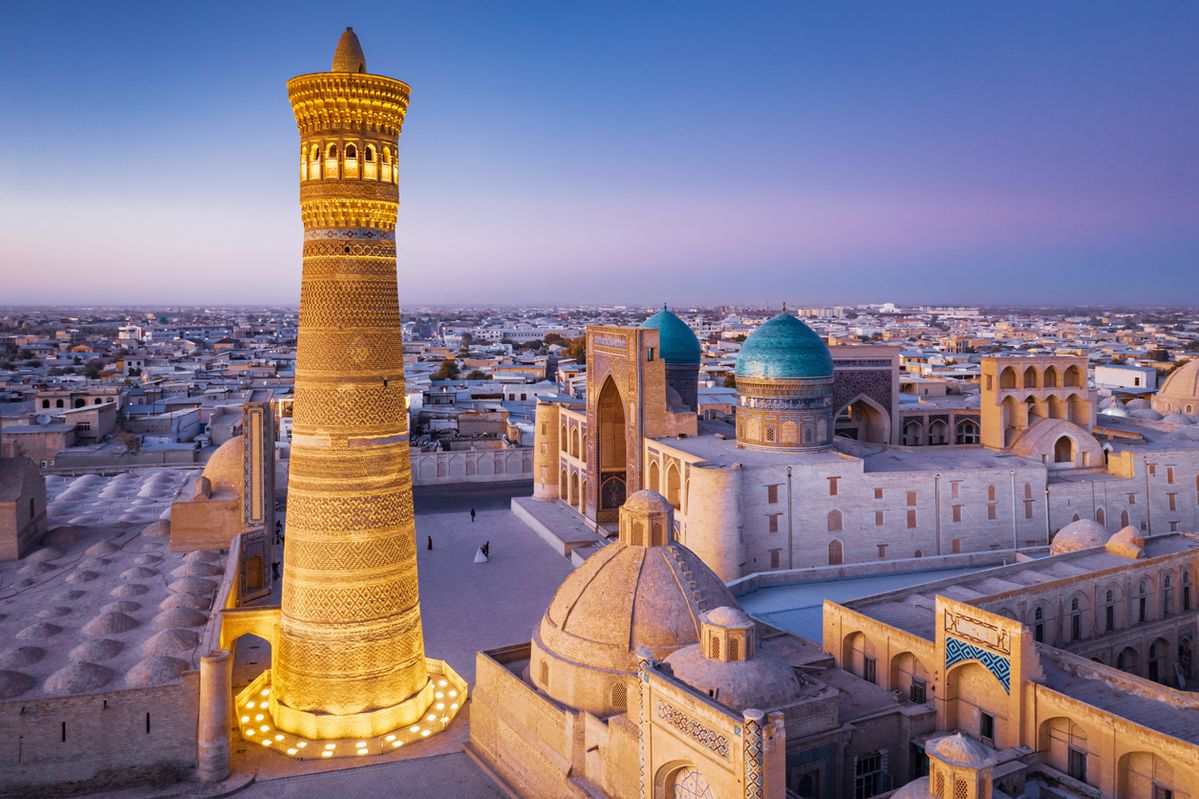
Bukhara tells a different chapter of the same story. Its old town is so well preserved it can feel like time folded. The Kalon Minaret — reportedly spared by Genghis Khan because it impressed him — still rises above everything. To spend the night in an old caravanserai where the call to prayer rides across the rooftops is the type of experience that higher-end travelers are looking for. And this is also the type of moment/experience that higher-end travelers are likely to remember while not being able to describe it adequately to those who have not been to Khiva.
In many ways, Khiva is like the closest city to you and is therefore the most remarkable (i.e. visually, historically, and spiritually). It includes an entire UNESCO World Heritage Site known as Ichan Kala; the entire area is walled-off from the rest of the city and contains numerous mosques, palaces, and minarets that can be reasonably felt to be still in existence since the Medieval Times (i.e. before 200AD). When people leave after the day/evening visits are finished, and the people of Khiva come outside to enjoy their evenings while the sun sets, it creates a moment that can be difficult to explain to those who could hopefully visit Khiva in the future.
Unforgettable Cultural Experiences in Uzbekistan
The monuments are extraordinary. But Uzbekistan’s culture runs deeper than its architecture, and the best experiences come through its living traditions:
- Suzani embroidery workshops in Bukhara and Samarkand — these hand-stitched textiles take up to two years to complete, and visiting a master artisan transforms them from souvenirs into something you actually understand
- A real plov ceremony — Uzbekistan’s national dish, slow-cooked in a massive kazan over open fire, is a cultural institution. Attending a genuine communal gathering rather than a tourist demonstration takes local knowledge to arrange and is completely worth it
- Classical music and dance rooted in the courts of Tamerlane — intimate evening performances in historic courtyards offer something far more authentic than any hotel ballroom show
- Teahouse culture — sitting in a traditional chaikhana, drinking green tea, watching the afternoon pass slowly — this is how Uzbekistan actually lives, and it quietly becomes one of the most memorable parts of any trip
Curating Your Premium Central Asian Adventure
The difference between a good trip to Uzbekistan and an exceptional one comes down almost entirely to how it’s planned. This is not a destination where winging it works well, nor is it one where a standard package tour does justice to what’s actually available here.
The right rhythm is three to four nights per city — enough time to go well beyond the main monuments in each place. Add Tashkent at the beginning or end for its surprisingly excellent contemporary food scene and Soviet-era architecture, which is worth at least a full day.
For getting between cities, the high-speed train to Samarkand is comfortable and scenic. For other legs, a private vehicle is worth it — it lets you stop at smaller towns, desert edges, and roadside melon stalls that no fixed itinerary can plan for in advance.
On accommodation — skip the international chains. There are several new boutique hotels in Uzbekistan, each being re-purposed historic buildings with unique design style, and a real sense of place. Opting to stay in these boutique hotels is the most significant way you can alter the overall experience of your trip.
Best Time to Visit and Travel Essentials
Spring (March to May) and Autumn (September to November) are the best seasons — mild temperatures, beautiful light, and the landscape at its most welcoming
- Summer is very hot, especially in Khiva which sits close to the desert — manageable but demanding
- Winter brings short days and limits some routes, but cities are quieter and carry their own atmosphere
- E-visas are available online for most nationalities and the process is straightforward
- The currency is the Uzbekistani som — cards are accepted in cities but carrying cash is practical for markets and smaller establishments
- Basic Uzbek or Russian phrases are genuinely appreciated by locals, though English-speaking guides are available across all major destinations
Start Your Journey with Our Exclusive Packages
Uzbekistan rewards those who invest in doing it properly. The history is extraordinary, the hospitality is genuine, and the character of these cities — still unhurried, still rooted in tradition — won’t stay this way indefinitely.
Our packages are built around private access to experiences that aren’t on the standard itinerary, expert-guided history from people who actually know these places deeply, handpicked accommodation that reflects the culture rather than insulates you from it, and itineraries built around what you’re actually drawn to rather than a template someone else filled out.
Whether it’s the Silk Road history, the artisan traditions, the food, or simply the appeal of going somewhere most people in your world haven’t been yet — we’ll put together something worth making the journey for.
Reach Aurora tours to begin planning. The magic of Uzbekistan is waiting.